STAUB vs Le Creuset: Dutch Ovens Compared by Specs
As an Amazon Associate we earn from qualifying purchases. Links on this page are affiliate links.
When you compare STAUB vs le creuset dutch oven, you are looking at two premium French brands that both use enameled cast iron. They share round shapes and induction compatibility. The main difference lies in their interior coatings and maximum heat tolerance. STAUB features a matte interior and higher oven safety limits, while Le Creuset offers a smooth light-colored enamel and a lower heat threshold. You should choose based on your cooking style and capacity needs.
Key differences
| Aspect | STAUB 7-qt Round Cast Iron Cocotte | Le Creuset 13.25 Qt Enameled Cast Iron Dutch Oven |
|---|---|---|
| Capacity | 7-qt | 13.25 qt. |
| Weight | 15.2 pounds | 22.6 pounds |
| Interior Coating | Interior matte texture | Light colored smooth interior enamel |
| Max Oven Temperature | 900F/482C without lid | 500°F |
| Lid Type | Tight-fitting lid with spikes | Tight-fitting |
| Knob Material | Nickel steel | not listed |
Which one should you choose?
Choose STAUB 7-qt Round Cast Iron Cocotte if
- You need a smaller 7-quart pot for everyday meals.
- You plan to cook at very high oven temperatures above 500°F.
- You prefer a matte interior that promotes browning.
Choose Le Creuset 13.25 Qt Enameled Cast Iron Dutch Oven if
- You require a large 13.25-quart capacity for big batches.
- You want a light-colored interior to monitor cooking progress easily.
- You prioritize a classic smooth enamel finish that resists staining.
Verdict: STAUB is better for you if you need high-heat tolerance and a smaller footprint for regular cooking. Le Creuset suits you better if you need massive capacity and a light interior for visual monitoring. Both brands deliver durable enameled cast iron performance.
STAUB vs Le Creuset Specs
Capacity and Size
Le Creuset offers a significantly larger 13.25-quart capacity, making it suitable for large batches or feeding a crowd. Its dimensions are 15.4 inches in length and 14.8 inches in width. STAUB provides a 7-quart round cocotte, measuring 15 inches long and 11.8 inches wide. The Le Creuset model is also taller at 6.8 inches compared to STAUB's 6.4 inches. If you need to cook large roasts or soups for many people, the Le Creuset volume is superior. For smaller households or standard meals, the STAUB size is more manageable and fits better on average stovetops.
Weight and Handling
Weight impacts how easily you can lift and move the pot. The Le Creuset 13.25-quart model weighs 22.6 pounds, which is substantial. STAUB’s 7-quart version weighs 15.2 pounds. The difference is over 7 pounds. STAUB is noticeably lighter, which may make it easier to handle if you have limited strength or arthritis. Both brands include ergonomic handles designed for lifting, but the sheer mass of the Le Creuset requires two hands for safe transport. If you prioritize ease of movement over volume, STAUB has the advantage here.
Oven Safety Limits
Maximum oven temperature determines where you can use these pots. STAUB is oven safe up to 900°F without the lid and 500°F with the lid. Le Creuset is oven safe up to 500°F. This means STAUB can withstand significantly higher heat for searing or finishing dishes under a broiler. The Le Creuset limit is standard for enameled cast iron. If you plan to use high-heat techniques or place the pot under intense broiler elements, STAUB allows for higher temperatures. For standard baking or braising, both meet typical needs.
Interior Coating Type
The interior surface affects browning and cleaning. STAUB features a unique matte texture interior, which promotes exceptional browning of meats and sauces. Le Creuset uses a light-colored smooth enamel interior. The light color allows you to monitor cooking progress and color changes easily. The matte texture on STAUB is designed to enhance the rainforest effect of the lid spikes. If you prefer visual monitoring of your food, Le Creuset’s light interior is better. If you prioritize aggressive browning and caramelization, STAUB’s matte finish is the superior choice.
Lid Design and Function
Both pots feature tight-fitting lids to retain moisture. STAUB includes spikes on the underside of the lid, creating a rainforest effect that evenly returns juices to the food. Le Creuset lids are designed to circulate steam and return moisture but do not list specific spike features in the data. Both designs aim to keep food moist during long braises. The STAUB spikes are a distinct mechanical feature for juice distribution. Le Creuset relies on its tight seal and steam circulation. Both are effective for moist cooking methods.
Cooktop Compatibility
Both products are compatible with all stovetops, including induction, gas, electric, glass, ceramic, and halogen. STAUB explicitly lists a smooth enamel bottom that works on all these surfaces. Le Creuset also states compatibility with all cooktops. There is no difference in their ability to be used on modern induction ranges or traditional gas burners. You can place either pot on any stove you own without compatibility issues. Both designs ensure even heat distribution regardless of the heat source type.
Choose your dutch oven by needs
You need high-heat searing and browning
STAUB handles oven temperatures up to 900F without the lid. Its interior matte texture promotes exceptional browning. The tight-fitting lid with spikes creates a rain-forest effect. This design evenly returns juices to the food. It works on all stovetops, including induction. This makes it ideal for high-heat techniques and moist cooking.
You cook large batches for crowds
Le Creuset offers a massive 13.25-quart capacity. Its tall sides contain splatters and reduce boil overs. The light-colored smooth interior enamel allows easy monitoring of cooking progress. It is dishwasher safe and compatible with all cooktops. The ergonomic knobs and handles are designed for easy lifting. This size suits large families or meal prep.
You prefer a lighter, manageable pot
STAUB weighs 15.2 pounds, which is lighter than Le Creuset's 22.6 pounds. It measures 15 inches in length and 11.8 inches in width. The compact 7-quart size fits smaller kitchens. The nickel steel knob is durable. It is oven safe up to 500F with the lid. This weight makes it easier to handle for daily use.
The products compared
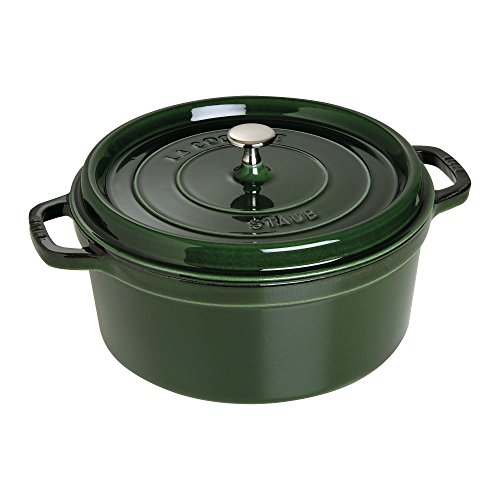
STAUB 7-qt Round Cast Iron Cocotte
Best for: Large batches and induction stovetops
- Capacity
- 7-qt
- Body Material
- Cast Iron
- Shape
- Round
- Cooktop Compatibility
- Gas, electric, induction, halogen
- Max Oven Temperature
- 900F without lid, 500F with lid
- Interior Coating
- Interior matte texture
View on Amazon: STAUB 7-qt Round Cast Iron Cocotte Affiliate link
This Staub 7-quart round cocotte is made in France from cast iron. It features a smooth enamel bottom for all stovetops, including induction. The matte interior promotes browning, while the spiked lid returns juices to the food. It is oven safe to 900F without the lid. This pot suits you if you need a durable, versatile vessel for braising and roasting.
Pros
- 7-quart capacity for large meals
- Smooth enamel bottom works on all stovetops
- Spiked lid creates a rain-forest effect
- Oven safe up to 900F without lid
Cons
- Heavier at 15.2 pounds
- Lid oven safe only to 500F
- Hand wash recommended despite dishwasher safe rating
Good fit if
- You cook for a crowd
- You use induction cooktops
- You want excellent browning
Skip if
- You prefer lighter cookware
- You need a larger 13+ quart size
- You want a lid safe to 900F
Verdict: STAUB 7-qt Round Cocotte is a heavy-duty option for those who need a large, induction-compatible pot. It fits you well if you prioritize browning and moisture retention over lightweight handling.

Le Creuset 13.25 Qt Enameled Cast Iron Dutch Oven
Best for: Large family meal preparation and batch cooking
- Capacity
- 13.25 qt.
- Body Material
- Enameled cast iron
- Shape
- Round
- Cooktop Compatibility
- All cooktops
- Max Oven Temperature
- 500°F
- Interior Coating
- Light colored smooth interior enamel
View on Amazon: Le Creuset 13.25 Qt Enameled Cast Iron Dutch Oven Affiliate link
This 13.25-quart Le Creuset Dutch oven is built from enameled cast iron with a light-colored smooth interior. It offers even heat distribution and retention for consistent cooking. The tight-fitting lid circulates steam effectively. It works on all cooktops and withstands oven temperatures up to 500°F. Its large capacity suits big families or meal prep enthusiasts who need ample space for soups and roasts.
Pros
- 13.25-quart capacity handles large batches
- Light-colored interior enamel aids visual monitoring
- Compatible with all cooktop types
- Oven-safe up to 500°F
Cons
- Weighs 22.6 pounds, making it heavy to lift
- Dimensions of 15.4 by 14.8 inches require substantial counter space
- Larger than the 7-quart Staub alternative on this list
Good fit if
- You regularly cook for six or more people
- You need a pot that fits all stove types
- You prefer monitoring food color changes easily
Skip if
- You have limited storage space for large cookware
- You struggle with lifting heavy items
- You typically cook for one or two people
Verdict: Le Creuset 13.25 Qt Round Dutch Oven is a substantial cooking vessel designed for high-volume meal preparation. It fits households that prioritize capacity and versatile heat source compatibility over compact storage.
Specifications side by side
| Spec | STAUB 7-qt Round Cast Iron Cocotte | Le Creuset 13.25 Qt Enameled Cast Iron Dutch Oven |
|---|---|---|
| Capacity | 7-qt | 13.25 qt. |
| Body Material | Cast Iron | Enameled cast iron |
| Shape | Round | Round |
| Cooktop Compatibility | Gas, electric, induction, halogen | All cooktops |
| Max Oven Temperature | 900F without lid, 500F with lid | 500°F |
| Interior Coating | Interior matte texture | Light colored smooth interior enamel |
| Lid Type | Tight-fitting lid with spikes | Tight-fitting |
| Material | Cast Iron | Cast Iron, Enameled Cast Iron |
| Dimensions | 15 × 11.8 × 6.4 inches | 15.4 × 14.8 × 6.8 inches |
| Weight | 15.2 pounds | 22.6 pounds |
| Size | 7-qt | 13.25 Qt |
| Color | Basil | Marseille |
| Model | 1102885 | 21177034200041 |
Frequently asked questions
Which dutch oven is better for induction cooktops?
Both the Le Creuset 13.25 Qt and the STAUB 7-qt Round Cocotte are suitable for induction stovetops. Cast iron is inherently magnetic, allowing it to work efficiently on induction burners. You can use either pot on induction without issue, provided the base is flat and clean for optimal heat transfer.
What is the weight difference between these two models?
The Le Creuset 13.25 Qt is significantly heavier at 22.6 pounds, while the STAUB 7-qt Round Cocotte weighs 15.2 pounds. This difference matters if you need to lift the pot frequently. The STAUB is easier to handle for smaller batches, whereas the Le Creuset offers more mass for stability during large meals.
Can I use these pots in a high-heat oven?
Yes, both enameled cast iron pots are oven-safe. The STAUB 7-qt Round Cocotte can withstand temperatures up to 900F without its lid. Le Creuset models are also designed for high-heat oven use, though specific limits depend on the handle material. Always check the manufacturer guidelines for your specific model before use.
Which model has a larger capacity for batch cooking?
The Le Creuset 13.25 Qt Enameled Cast Iron Dutch Oven offers the larger capacity. It holds 13.25 quarts, making it ideal for large family meals or batch cooking. The STAUB 7-qt Round Cocotte holds 7 quarts, which is sufficient for smaller households or standard recipes that do not require massive volume.
How do the dimensions compare for storage?
The Le Creuset 13.25 Qt measures 15.4 inches in length and 14.8 inches in width. The STAUB 7-qt Round Cocotte is smaller, measuring 15 inches in length and 11.8 inches in width. If you have limited cabinet space, the STAUB model may fit more easily due to its narrower footprint.
Is cast iron the only material used in these pots?
Both pots are made from enameled cast iron. This material provides excellent heat retention and even heating. The enamel coating prevents rust and allows for easy cleaning. You get the durability of cast iron with the convenience of a non-stick surface, making both options suitable for long-term daily use.